Acrylic polymer uses cover coatings, adhesives, plastics, textiles, construction materials, packaging, cosmetics, water treatment and PVC modification. In industrial manufacturing, acrylic polymers are valued because they can provide transparency, weatherability, adhesion, toughness, film formation and processing improvement.
For PVC manufacturers, acrylic-based additives are especially important. Hairuite provides PVC Processing Aids, ACR Impact Modifier and complete PVC Compounding Additives for pipes, profiles, sheets, foam boards, WPC, SPC and other PVC products. Hairuite’s ACR impact modifier is described as compatible with PVC, ABS, HIPS and other plastics, while its acrylic processing aid is used in window profiles, door frames and exterior siding.
An acrylic polymer is a polymer made from acrylic or methacrylic monomers, such as acrylic acid, acrylates, methacrylates or their derivatives. Because different monomers and structures can be selected, acrylic polymers can be designed for hard plastics, flexible films, coatings, pressure-sensitive adhesives, water-absorbing materials and plastic additives.
The IUPAC acrylic polymer definition provides the chemical basis for the term, while PubChem notes that acrylic acid is used to manufacture plastics, latex applications, coatings, floor polish, leather finishing and paper coatings. The broad chemistry explains why “acrylic polymer” does not refer to one single product, but to a family of materials.
In purchasing, this matters because a PMMA sheet resin, an acrylic adhesive, an acrylic emulsion and an ACR PVC modifier may all be “acrylic polymers,” but they serve very different production goals.
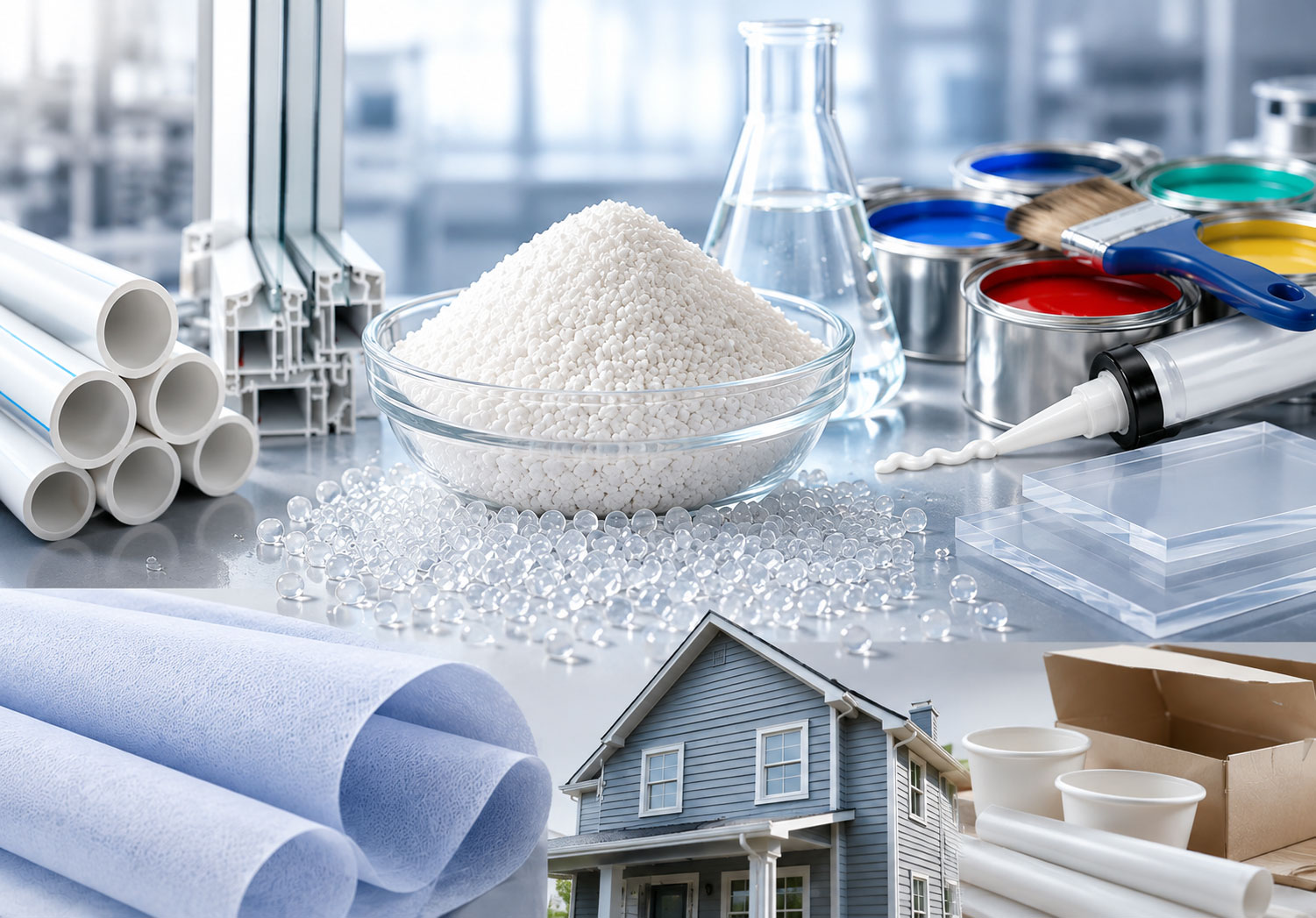
Acrylic polymer uses differ by molecular structure, physical form and performance target. The same polymer family can support surface protection, bonding, impact resistance, plastic modification and processing stability.
| Application Area | Acrylic Polymer Function | Common Products |
|---|---|---|
| Coatings and Paints | Film formation, weatherability, gloss and durability | Architectural coatings, industrial coatings, road marking paints |
| Adhesives and Sealants | Bonding strength, tack and aging resistance | Pressure-sensitive adhesives, construction adhesives |
| Plastics | Transparency, toughness, weather resistance | PMMA sheets, modified PVC, ABS blends |
| PVC Additives | Fusion improvement, melt strength, impact resistance | ACR processing aid, ACR impact modifier |
| Textiles | Binder, finishing and fiber modification | Nonwoven binders, textile coatings |
| Paper and Packaging | Surface treatment, coating and barrier improvement | Paper coatings, packaging coatings |
| Construction | Durability and weather protection | Profiles, siding, sealants, flooring |
| Water Treatment and Absorbents | Water retention or dispersing function | Polyacrylate absorbents, dispersants |
Canada’s acrylates and methacrylates assessment lists uses across adhesives, paints, coatings, inks, plastics and textiles, as well as automotive, construction, electronics and polymer manufacturing.
Acrylic polymers are used in PVC additives to improve processing behavior, melt strength, surface quality and impact resistance. In rigid PVC production, they help the compound fuse more uniformly, flow better through extrusion equipment and achieve stronger final product performance.
Hairuite’s PVC processing aids are acrylic-based additives designed to improve PVC melt processing. Its HR-401 processing aid is described as an acrylic-based processing aid for PVC, while Hairuite’s product portfolio includes self-developed all-acrylate ultra-high molecular weight processing aids used in profiles, tubes, foaming pipes and wood-plastic products.
For impact modification, acrylic polymers can also improve toughness and weatherability. Hairuite’s ACR impact modifier is used for modification of PVC and other plastics, and its PVC impact modifier content highlights applications such as profiles, siding, window profiles and door frames.
Choosing the right acrylic polymer additive means matching the polymer function to the processing problem and final product requirement. For PVC factories, the key question is whether the formulation needs better processing, stronger impact resistance, higher melt strength, smoother surface or improved outdoor durability.
For extrusion of PVC profiles, pipes and siding, acrylic processing aids can help improve fusion and surface quality. For foam boards and WPC products, higher melt strength may be more important. For rigid PVC products that need toughness, ACR impact modifiers are usually considered. For coatings and adhesives, the buyer should instead focus on film formation, glass transition temperature, solid content, viscosity and adhesion performance.
The PubChem acrylic acid uses information also shows why acrylic chemistry is widely used in resins, paints and adhesives. For industrial buyers, sample testing is still necessary because acrylic polymer performance depends on formulation, equipment, temperature, filler level and compatibility with other additives.
Acrylic polymer uses are broad because acrylic chemistry can be designed for coatings, adhesives, plastics, textiles, paper, packaging, construction materials and PVC modification. In PVC manufacturing, acrylic polymers are especially valuable as processing aids and impact modifiers because they can improve fusion, melt strength, surface finish, toughness and weatherability.
Hairuite supplies acrylic-based PVC processing aids, ACR impact modifiers and other PVC compounding additives for manufacturers of profiles, pipes, sheets, foam boards, WPC and SPC products. For the best result, buyers should select acrylic polymer additives based on resin type, filler content, extrusion process, product application and required final performance.
Acrylic polymers are used in coatings, adhesives, plastics, textiles, paper coatings, packaging, construction materials, water treatment and PVC additives.
Not always. Acrylic plastic often refers to PMMA, while acrylic polymer is a broader term that includes acrylate and methacrylate polymers used in many industries.
They are used in PVC to improve processing, melt strength, surface quality, impact resistance and weatherability, depending on whether the additive is a processing aid or impact modifier.
ACR impact modifier is an acrylic-based additive used to improve toughness and impact resistance in PVC and other plastics.
Acrylic processing aid is a high molecular weight polymer additive that helps PVC fuse, flow and process more smoothly during extrusion or molding.
Hairuite provides PVC processing aids, ACR impact modifiers and complete PVC compounding additives for pipes, profiles, sheets, foam boards, WPC, SPC and other PVC manufacturing applications.



 English
 русский
 Español